Kallistos Ware on Religion, Science and Technology
Kallistos Ware
62.31
27 February 2025
15 September 2025
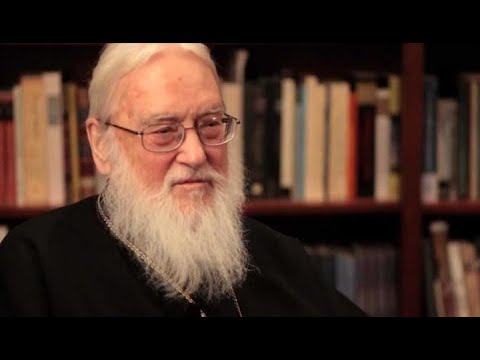
Meeting Metropolitan Kallistos Ware in his home at Oxford was a very special occasion. To be in the presence of this great man was something I will never forget. The metronome was going for the full hour. It seemed every word was measured. The precision of the responses of the Bishop still make me wonder. For some time, Michael and I had hoped to interview Metropolitan Kallistos for our research, and the opportunity arose perchance on a trip I had to England on 20 October 2014. Two years later, I had the opportunity to see Geronta again, where we sat down and went through the transcription of the interview from beginning to end. The interview was turned into a booklet that can be purchased here: https://www.amazon.com/Religion-Science-Technology-Orthodox-Perspective/dp/1741282632 Bishop Kallistos fell asleep in the Lord on August 24, 2022. --Religion, Science & Technology: An Eastern Orthodox Perspective (Technology and Society Studies) Paperback December 20, 2016 by Kallistos Ware (Author), M.G. Michael , Katina Michael An interview with Metropolitan Kallistos of Diokleia on the interplay of religion, science and technology from an Eastern Orthodox perspective. Metropolitan Kallistos was Spalding Lecturer of Eastern Orthodox Studies at Oxford University for 35 years, and speaks here with M.G. Michael and Katina Michael of the University of Wollongong Australia on key issues, such as whether science and religion are in conflict, technology's impact on the practice of religion, responsible innovation, transhumanism, human enhancement and medical prosthesis. Metropolitan Kallistos responds to questions posed by sociotechnical systems researchers Michael and Michael, such as: are science and religion in conflict? Are there limits to innovation? Is religious faith threatened by technology? What if machines were to achieve artificial intelligence? Metropolitan Kallistos provides a sober critique of topics in technology and society, answering twenty questions, and giving readers of diverse backgrounds the opportunity to reflect on technological trajectories, past and present. Theological terms such as "image and likeness", the Incarnation, tradition, and omniscience are addressed, as are socioethical concepts of judgement, freedom, morality, and values. The well-known story of the Tower of Babel from the Book of Genesis, also serves as a backdrop in discussions related to scientific enquiry, the creation of new technology, engineering and hubris. Of course, there is nothing wrong with invention, for the faithful the creative genius is a gift from God to be nurtured, to be used to sustain and enhance life. It becomes a significant matter however, if humans or animals in the process of technological innovation at invention, commercialisation or diffusion, are misused for experimental purposes and not shown proper respect. In only a way we have come to expect from Metropolitan Kallistos- logical, eloquent and witty- he summates so accurately: "Now, a machine however subtle does not feel love, does not pray, does not have a sense of the sacred, a sense of awe and wonder. To me these are human qualities that no machine, however elaborate, would be able to reproduce. You may love your computer but your computer does not love you." Although this book is a mere thirty-six pages in length, it stands as an excellent guide on helping consumers navigate through their own moral decisions with respect to modern technology. Religion, Science and Technology can be read cover to cover in an hour. It can serve as a guide for further enquiry, especially for students in theology, philosophy, social science, and of course, science, technology, engineering and mathematics (STEM). It can also serve as a thought-provoking introduction to the branch of the social implications of technology for any reader interested in futurism.